There are times when one room in your home seems warmer than the others and you’re not alone. When the central air conditioner is operating, the attic, garage, home office, additions and upstairs rooms may still be too hot.
When choosing a portable air conditioner vs split air conditioner, you should take your budget, cooling requirements, and long-term plans into account. Portable air conditioners provide flexibility and are less expensive, but split air conditioners provide more powerful cooling, quieter operation and energy efficiency.
What Is a Portable Air Conditioner?

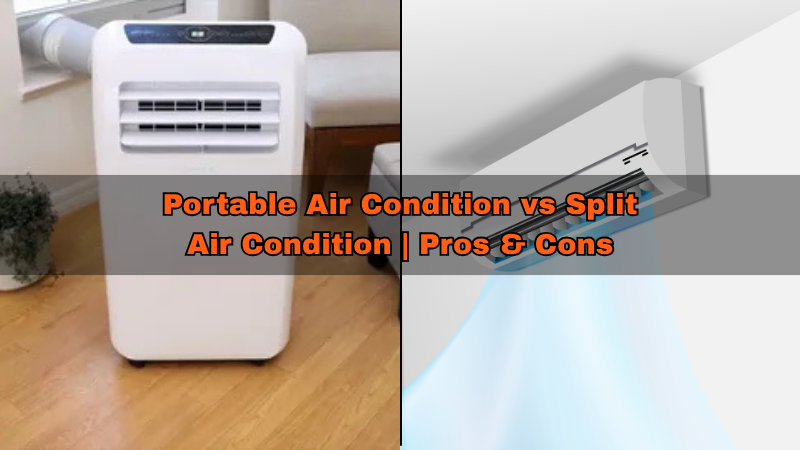
Portable air conditioners are coolers that are easily transported and take heat from a room and expel it to the outdoors via a cooling hose.
A portable AC is different from a split air conditioner because it houses all the major parts within the room. Warm air from the indoors is sucked into the unit, chilled with a heat refrigerant and expelled through a window vent kit.
Portable air conditioners are easy to set up, as the compressor stays in the unit. But they tend to produce a lot of noise within the building and can lose some cooling efficiency in the exhaust process.
Advantages of Portable ACs
The main characteristic of portable air conditioners is that they are simple, convenient and affordable.
The majority of models can be installed by the homeowner. This means that a homeowner or renter could begin cooling a room shortly after buying a new home.
Mobility is one of the other advantages. Can be transferred from a bedroom, office or living room if necessary. Portable ACs can be helpful for short-term heating and cooling needs and during the seasonal weather changes.
The Drawbacks of Portable ACs
There are several disadvantages with portable air conditioners, as opposed to split AC units.
This makes the noise level typically high, as the compressor is located within the room. Users often hear the sound while sleeping, working or watching TV.
Cooling performance may also not be as consistent in bigger rooms. Portable units are suitable for small rooms but may not be effective in garages, converted attics and large open spaces.
What Is Split AC?

Split air conditioners consist of an indoor unit and an outdoor condenser that are used to cool a room efficiently.
The air-cooled condenser is located outdoors and the fan-cooled evaporator is located inside. The compressor remains in the outside location, resulting in reduced noise level within the building and enhanced cooling performance.
A split air conditioner design can ensure a comfortable temperature even during hot seasons. They are therefore very popular in bedrooms, living rooms, offices and converted rooms.
Benefits of Split ACs
Split air conditioners are more powerful than portable air conditioners.
This system can lower the temperature of a room faster and keep it at constant temperature all day long. Moreover, several of the new ones have inverter technology to cut down on the electricity consumption.
Most split AC systems are also suitable for heating and cooling. This enables the homeowner to have the same system all year round, without the need for additional equipment.
Limitations of Split ACs
The disadvantage of split AC is that they are more expensive initially. Split systems are installed professionally and unlike portable units, are not installed on the floor. The inside and outside units must be linked by refrigerant lines and electric cables.
Permanence is another factor to consider. Post-installation, the system doesn’t move and may be less appropriate for renters or short-term cooling requirements.
Understanding the Difference Between Portable ACs and Split ACs
The compressor is exposed to the air, so the system is devoted to bringing the cooled air into the building. This results in quicker cooling and even cooling.
Even smaller rooms can benefit from portable air conditioners. But, split units tend to work better in bigger areas and when they are used for longer periods.
Energy Efficiency
A split AC would typically consume less energy than a portable AC.
The heat transfer technology and advanced compressors used in modern split systems help to boost efficiency. This makes them use less electricity and provide better cooling efficiency.
While portable units may be less up-front, they may be more expensive to run over time due to energy consumption.
Installation Requirements
The installation of portable ACs is simpler than split ACs.
Most portable units only require a nearby electrical outlet and a window connection for the exhaust hose. Homeowners are generally able to install the product without special tools.
The installation of split systems is a job that should be done by a professional as the refrigerant lines, drainage systems and electrical connections need to be installed properly.
Noise Levels
A split AC is much quieter than a portable AC.
The compressor (which is usually the loudest part of an air conditioner) is located in the outdoor condenser. Thus, indoor noise level is low.
Portable air conditioners contain a compressor within the room. Consequently, they tend to create audible operation sounds during the cooling process.
Upfront and Long-Term Costs
Portable ACs are cheaper to buy, and split ACs may be cheaper to run.
If you need to cool your home but don’t want to invest in a big air conditioner, a portable air conditioner might be a wonderful choice.
But overall split systems last longer, use less electric power and perform better. The increased installation costs may be mitigated over the years by the benefits obtained.
Portability and Flexibility
Portable ACs are more mobile than split ACs.
It can be transferred from room to room as needed for cooling. This flexibility is attractive to renters and homeowners that are looking for temporary solutions.
Split AC systems are installed ones. They are not easily movable, but they offer reliable comfort in the location where set up.
What Is the Best Type of AC?
A portable AC might be more suitable for renters, small areas, or when budgets are constrained. A portable unit is a viable option if the cooling needs are only seasonal for a few months of the year. Portable air conditioners also perform the job in apartments, properties where split is not permitted, and more.
When a Split AC Is the Better Investment
For homeowners looking to invest in comfort for the long run, a split AC is typically the better option.
Split systems can provide consistent cooling and help reduce your operating costs if you work in a garage, attic space, basement room or home addition on a regular basis.
Split ACs are also popular among homeowners due to their noise, energy-efficient features.